Cooking with Extra Virgin Olive Oil
How to cook with extra virgin olive oil: whether you can fry with it, the smoke point myth, using it as a finishing oil, and which oil to use for which job.
You can cook with extra virgin olive oil, including frying. The old idea that heat ruins it, or that it is only for salads, does not hold up. Extra virgin is stable under normal kitchen heat because it is high in monounsaturated fat and carries natural antioxidants. The real question is not whether you can cook with it, but which oil to use for which job, so you are not wasting a peppery finishing oil in a deep fryer.
This is the hub for cooking. Below is the practical version.
The smoke point myth
Smoke point gets treated as the rule for whether an oil can take heat. It is a poor guide. Extra virgin olive oil smokes at roughly 190 to 210 °C, which sits above most home cooking anyway, but more to the point, how an oil holds up to heat depends on its oxidative stability, not the temperature it starts to smoke. On stability, extra virgin does well. Australian lab work by Modern Olives comparing common oils under heat found extra virgin among the safer and more stable choices. The full explainer is the olive oil smoke point myth.
Can you fry with it?
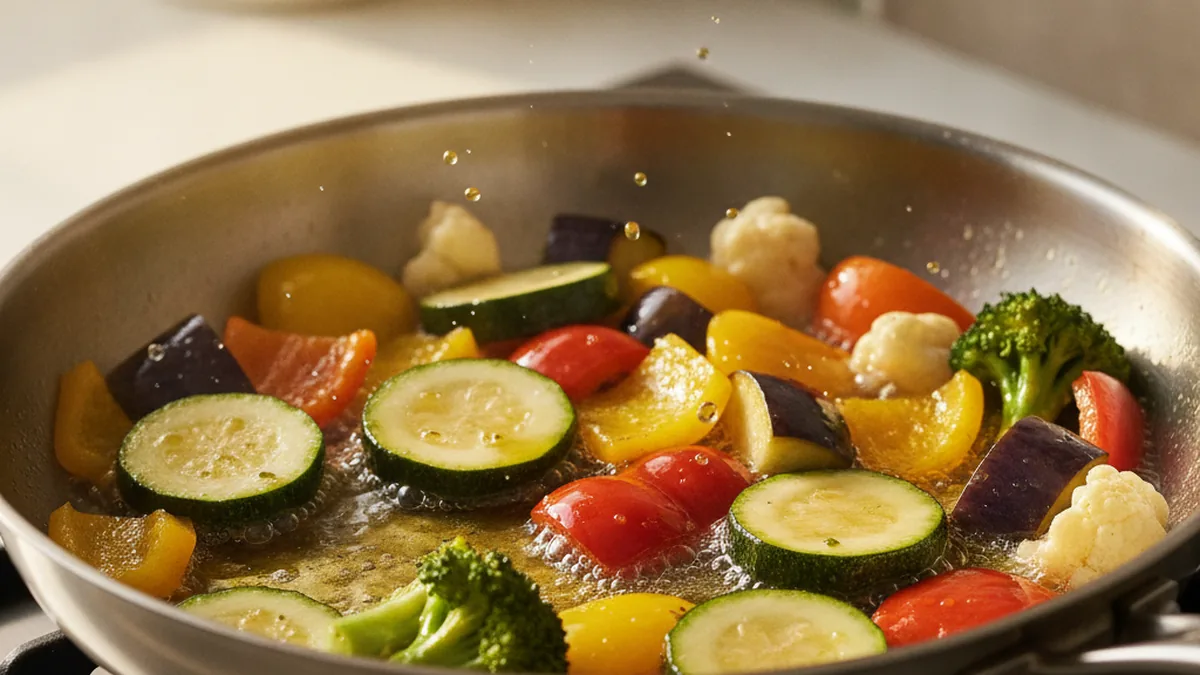
Yes. For pan-frying, shallow-frying, roasting and sautéing, extra virgin is a good everyday oil. Deep frying works too, though it uses a lot of oil, so many cooks keep the good bottle for finishing and use a cheaper olive oil or blend for the fryer. See is extra virgin olive oil good for frying.
Save the best for raw
High heat does soften the delicate aromas and reduces some polyphenols, so the smart split is simple:
- Everyday heat: a fresh, mid-priced Australian extra virgin. Frying, roasting, tray bakes, the base of a sauce.
- Raw and finishing: your best, most peppery bottle, used off the heat. Drizzled over soup, grilled vegetables, fish, bread, or a salad, where you actually taste it.
A robust single varietal like Coratina or Frantoio shines as a finishing oil. A milder Arbequina is the easy all-rounder.
When to reach for something else
Extra virgin has flavour, which is usually the point, but not always what you want. For a neutral taste in a delicate cake, or for very high-heat searing where you would rather not spend premium oil, a substitute makes sense. Knowing when to swap is part of cooking well with it.
Keep it fresh
Oil that has gone stale will taint whatever you cook. Extra virgin is a fresh product, not a pantry forever-item: unopened it keeps roughly 18 to 24 months from harvest, and once opened it is best used within a few months. Store it cool, dark and sealed. See how long olive oil lasts and how to store olive oil.
The short answer
Cook with extra virgin olive oil freely. Use a fresh everyday bottle for the heat, keep a better one for drizzling raw, and store both properly. If you want the reasoning behind the “yes, you can fry with it” in one place, read cooking with extra virgin olive oil, and for why it is a sound fat in the first place, see the health benefits.
Explore Cooking
Can You Cook with Extra Virgin Olive Oil?
Yes, you can cook and fry with extra virgin olive oil. Here is why the smoke point worry is overblown, and how to use the right oil for the right job.
How Long Does Olive Oil Last?
Unopened olive oil lasts roughly 18 to 24 months from harvest, opened use within 1 to 3 months. How to tell if it has turned and why it is a fresh product.
Is Extra Virgin Olive Oil Good for Frying?
Yes, extra virgin olive oil is good for shallow, pan and even deep frying. Here is which grade to use where, plus the temperature control that matters.
Olive Oil Substitutes: What to Use Instead
Run out of olive oil or need a neutral flavour or very high heat? Here are the best substitutes for cooking, baking and dressings, with swap ratios.
The Olive Oil Smoke Point Myth
The claim that you cannot cook with extra virgin olive oil is wrong. Here is the real smoke point range and why stability matters more than smoke.