The Australian Olive Oil Industry
An overview of the Australian olive oil industry: how the oil is made, the autumn harvest, the world-leading standard, the big producers, and local versus imports.
The Australian olive oil industry is young by world standards but serious about quality. It runs from a handful of very large mechanised producers through to hundreds of small estates, and it is built on one clear advantage: Australian oil is pressed fresh in autumn, opposite the northern hemisphere, and held to one of the strictest extra virgin standards anywhere. The country still produces well below what it consumes, so much of the oil on local shelves is imported, which is exactly why the fresh-and-certified local story matters.
This is the hub for the industry. Here is how it fits together.
How the oil is made
Extra virgin olive oil is made by mechanical means only. Olives are harvested, washed, crushed to a paste, the paste is slowly mixed (malaxation), and the oil is separated out by centrifuge, all without heat or solvents. Keeping the process below about 27 °C is what “cold extraction” means. The full walk-through is how extra virgin olive oil is made.
The autumn harvest
Australian olives ripen and are picked in autumn, roughly April to July depending on the region, and the best producers press within hours. That timing is the heart of the freshness advantage: while northern-hemisphere oil is pressed months earlier and then shipped, Australian oil can reach the shelf only weeks or months old. See the Australian olive harvest season.
A world-leading standard
Australia sets a high bar for what can be called extra virgin. The national standard AS 5264, published in 2011, is regarded as one of the toughest in the world, and the Australian Olive Association runs a voluntary certification and trust mark on top of it, backed by chemical and sensory testing. Industry research and marketing are supported through Hort Innovation via the olive levy. Together these give Australian buyers an unusually reliable way to know what they are getting.
The big producers and the many small ones
At the large end, Cobram Estate, run by Boundary Bend, is Australia’s biggest producer, with major groves at Boort in Victoria and in the South Australian Riverland, its own testing lab in Modern Olives, and a strong record at international awards. Around it sits a wide field of boutique estates, especially across Western Australia, South Australia and the eastern regions, many focused on single-estate, single-varietal oils.
Local versus imports
Because Australia grows less oil than it drinks, imported oil fills much of the gap, and imports are usually older by the time they arrive. That is the core of the case for buying local: fresher oil, a tougher standard, and certification you can check. The trade-offs, and when an import still makes sense, are covered in imported vs Australian olive oil.
Why this matters to a shopper
You do not need to follow the industry to benefit from it. The short version is that a fresh, certified Australian extra virgin is one of the best-value quality foods in the supermarket, precisely because of how and when it is made here. To turn that into a buying habit, start with choosing a good bottle and the varieties behind the flavour.
Explore Industry
Cobram Estate and Boundary Bend: Australia's Biggest Olive Oil Story
How Boundary Bend built Cobram Estate and Red Island into Australia's largest olive oil business, with groves at Boort and the Riverland and its own lab.
How Extra Virgin Olive Oil Is Made
A clear, step-by-step guide to how extra virgin olive oil is made in Australia, from autumn harvest to bottling, with no heat and no solvents.
Imported vs Australian Olive Oil
Why Australian olive oil is usually fresher than imported, how to read country of origin labels, the certification advantage, and when imports still make sense.
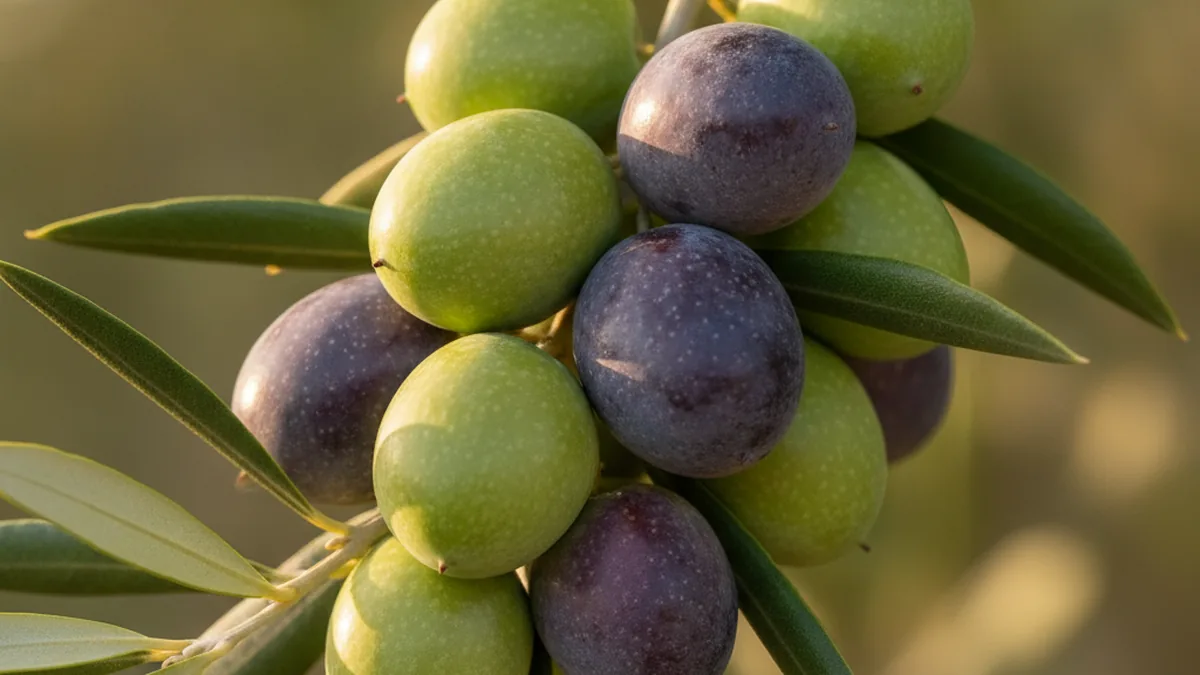
The Australian Olive Harvest Season
When Australian olives are picked and pressed: the autumn harvest from April to July, why the timing matters, and how it makes local oil fresher than imports.